
Ceiling fan installation Perth pricing runs from $150 to $350 per fan for labour, plus the cost of the fan, and WA law requires a licensed electrician to do the wiring. A 1200mm fan suits a typical master bedroom, while living areas over 25m² work best with two fans. A quality ceiling fan lasts 10 to 15 years and includes a switch which allows it to run in reverse to push warm air down in winter.
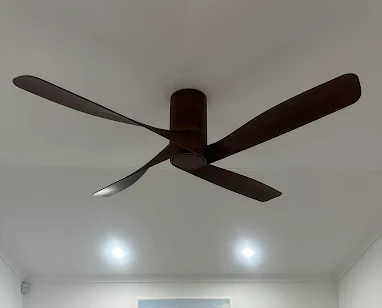
A ceiling fan cools a whole room from a fixed point and takes up no floor space. A pedestal fan costs less upfront, needs no installation and moves between rooms. For bedrooms and living areas used every day through a Perth summer, a ceiling fan is the better long-term investment, especially a DC model with a reverse function for winter.
|
Feature |
Ceiling fan |
Pedestal fan |
|
Purchase price |
From around $100 (AC) or $250 (DC) |
From around $30 |
|
Installation |
Licensed electrician required |
Plugs into a power point |
|
Power draw on high |
30 to 35W (DC), 60 to 90W (AC) |
Around 40 to 60W |
|
Coverage |
Whole room from above |
One direction only |
|
Winter use |
Reverse mode spreads warm air |
No winter function |
|
Kids and pets |
Blades sit 2.1m or more above the floor |
Grille and cord within reach |
When evaluating ceiling fan vs pedestal fans, pedestal fans are the better option when you’re renting and don’t have landlord approval to install a ceiling fan, your ceiling is too low for the required 2.1 metre blade clearance, you only need a temporary cooling solution, or you only need spot cooling at a desk or workbench. However, a ceiling fan is much better if you want whole-room airflow in a bedroom, living area or alfresco you use every day, want no cords on the floor, or want a fan that also spreads heat around in winter.
The size of your room typically determines which ceiling fan size is best. For a smaller room under 15m², a 900mm fan does the job. A standard 15 to 20m² bedroom is best suited to a 1200mm fan, while a 20 to 25m² living area works well with a 1400mm fan. Larger open-plan spaces over 25m² usually need two or more fans.
The table below is based on the NCC ceiling fan table. It isn’t a legal requirement in Perth, but it’s a solid, government-backed guide to getting the size of your fan right.
|
Room size |
Best fan size for a bedroom |
Best fan size for a living area |
|
Under 15m² |
1 x 900mm blade fan |
1 x 900mm blade fan |
|
15 to 20m² |
1 x 1200mm blade fan |
1 x 1200mm blade fan |
|
20 to 25m² |
1 x 1200mm blade fan |
1 x 1400mm blade fan |
|
25 to 30m² |
1 x 1400mm blade fan |
2 x 1200mm blade fans |
|
30 to 45m² |
1 x 1400mm blade fan |
2 x 1400mm blade fans |
|
Over 45m² |
2 x 1400mm blade fans |
3 x 1200mm blade fans or more |
Measure the room first. Multiply the length by the width and you have the floor area in square metres. A 7m x 6m open-plan kitchen, dining and family area comes to 42m², so you’re looking at two 1400mm blade fans. Hang one fan over each zone, like the dining table and the lounge. Just keep both fans away from a gas cooktop, as the downdraft can push the flame around.
A downrod is the metal pipe that connects the fan motor to the ceiling bracket. Australian Standards require blades to sit at least 2.1 metres above the floor. Downrods bring the fan closer to where you’re sitting or standing, making the fan more effective in rooms with high ceilings. Standard 2.4 metre Perth ceilings suit a fan on its supplied mount, while high or raked ceilings need a longer downrod or an angled mount.
An AC motor runs directly on household power and draws 60 to 90 watts on high. A DC motor converts power to direct current and draws 30 to 35 watts when the fan is running at a high speed. DC fans cost more upfront but run quieter and offer more speeds. A DC fan suits bedrooms used nightly, while an AC fan suits a spare room.
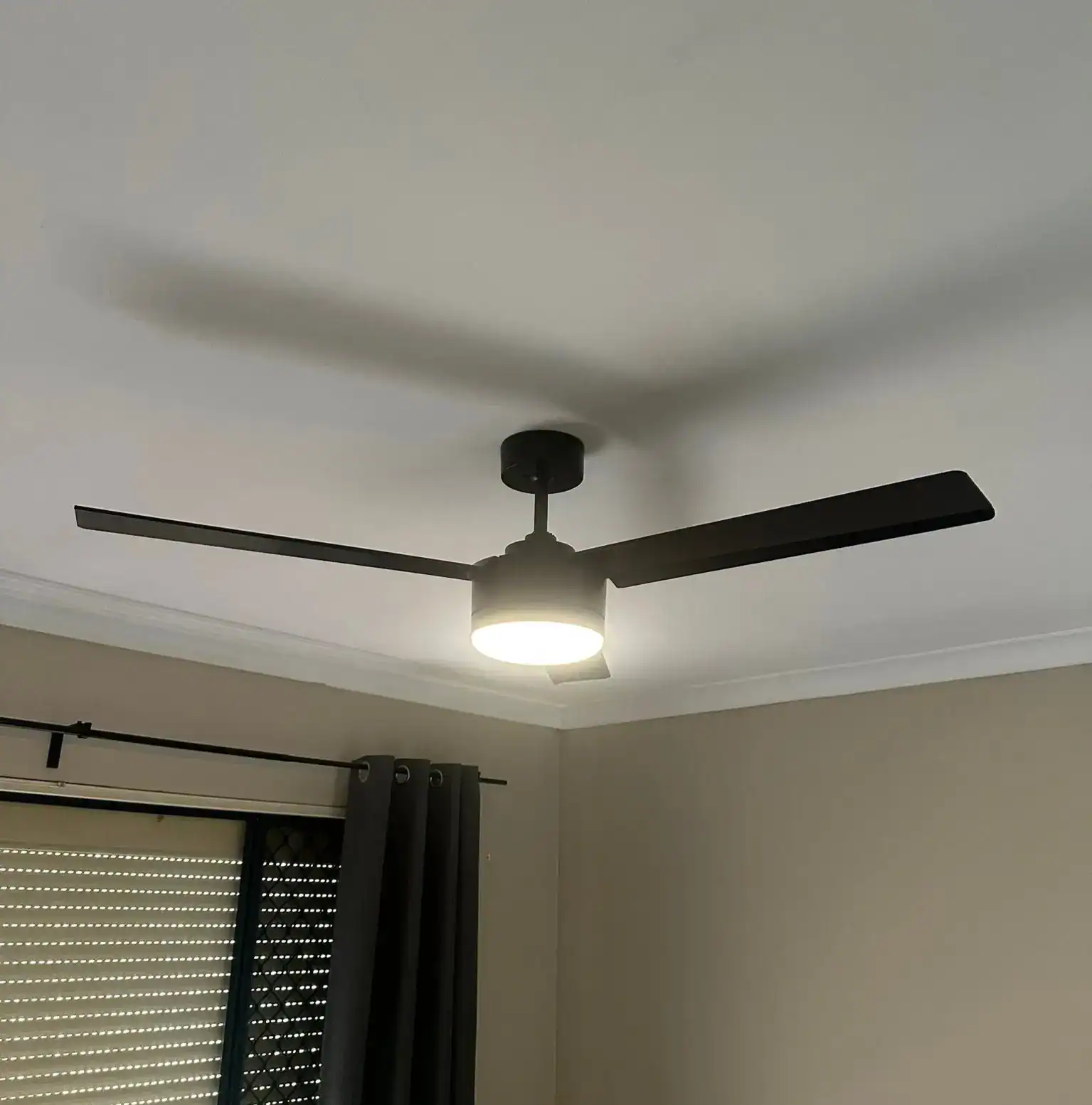
Many high-quality ceiling fans have a reverse function that makes them useful in winter. Running the fan clockwise on low speed pushes warm air trapped at the ceiling back down into the room. Combined with a 10 to 15 year lifespan for a quality fan, reverse mode turns a ceiling fan into an every-season appliance rather than something that only works during summer.
Reverse mode flips the direction the blades of your ceiling fan spin. Normally, during summer, the fan turns anticlockwise and pushes air down onto you for a cooling breeze. In winter, switch the fan to reverse mode (clockwise). Naturally, hot air rises, meaning on a normal winter day, the hottest air in your home is floating around the top of your ceiling. When your ceiling fan is in reverse mode, the blades will pull air up and push the warm air at the top of the ceiling back down to where you can feel it. This works really when you also have a heater or reverse-cycle split system air conditioner running in your home.
To switch modes:
Not every fan reverses, so check the specs before you buy.
A quality ceiling fan lasts 10 to 15 years with basic care. Budget fans with cheaper motors and bearings wear out sooner. On a DC fan, the remote receiver is a common failure point, and an electrician often replaces the receiver alone rather than the whole fan.
Replace a fan that shows any of these signs:
Ceiling fan installation costs $150 to $350 per fan for labour in Perth. A ceiling fan generally costs around $130-$300 for an AC model or $250-$500 for a DC model. The final labour price depends on the existing wiring you have in your property, your ceiling height, roof-space access and the type of control the fan uses.
|
Job type |
Effect on price |
|
Replacing an existing ceiling fan |
Lowest |
|
Replacing a light with a fan (new fan-rated bracket) |
Moderate |
|
New fan point with new cabling and switch |
Higher |
|
High or raked ceiling, or no roof-space access |
Higher or quoted individually |
To keep installation costs down, have your electrician install every fan in one visit, place fans at existing light points, and pair the job with roof-space work such as LED lighting installation.
|
Fan type |
Power on high |
Cost per hour |
|
DC ceiling fan |
30 to 35W |
About 1 cent |
|
AC ceiling fan |
60 to 90W |
2 to 3 cents |
|
Pedestal fan |
40 to 60W |
1.3 to 2 cents |
Figures use Synergy’s Home Plan (A1) rate of around 32 cents per kWh. A DC fan running eight hours a night for a 90-night summer costs roughly $8.
WA law requires a licensed electrician for all electrical installing work, and connecting, moving or replacing a hardwired ceiling fan falls under that rule. Unlicensed work is illegal, dangerous and leaves no electrical safety certificate on record.
No. Electrical work by an unlicensed person is illegal in WA, including a straight swap on an existing fan point. In December 2025, a Perth man was fined $20,000 at Joondalup Magistrates Court for unlicensed electrical work that included a ceiling fan. Homeowners can still choose the fan, switch between summer and winter mode, and clean the blades with the fan off.
An electrical safety certificate is a legal document confirming electrical installing work is complete, tested and safe. An electrical contractor must provide one within 28 days of finishing the work, as Building and Energy explains. Maintenance and like-for-like replacements are exempt.
If you’re searching for ceiling fan installation near me in Perth’s eastern suburbs, Phase Pro Electrical WA (licence EC16991) is based in High Wycombe and installs ceiling fans across Perth metro. For tips on picking the right tradie, have a read of our guide to finding a trusted local electrician in Perth.
Getting the right ceiling fan comes down to three important factors: choosing a fan size that suits the room, choosing a DC motor fan for rooms you use every night, and hiring a licensed electrician to do the installation. A high quality fan will keep you comfortable and last for the next 10 to 15 years. Contact our friendly team today for more information or a quote on a ceiling fan installation in your Perth property.
FAQS
A 1200mm fan suits a master bedroom of 15 to 25m². Minor bedrooms under 15m², such as a 3m x 3m room, suit a 900mm fan. Bedrooms over 25m² suit a 1400mm fan.
Yes. A ceiling fan draws 30 to 90 watts on high, while a split system draws hundreds to thousands of watts depending on its size and the temperature you have it set to. Running a DC ceiling fan for 8 hours costs about 9 cents, compared with roughly $1.05 for a small bedroom split system and $3.95 for a large living area split system.
Yes, for rooms that run a fan for hours each day. A DC fan uses about half the power of an AC fan, runs almost silently, and offers more speed settings. For a spare room used a few times each summer, an AC fan is the more economical choice.
A ceiling fan with an integrated light uses the same fan point as a standard fan. Separate wall switches for the fan and the light need extra wiring, which adds to the labour cost. A remote-controlled fan with a light avoids the extra switching because one remote runs both.
A DC ceiling fan is the better choice for sleeping. A DC ceiling fan runs much quieter, spreads gentle airflow across the whole room and keeps cords off the bedroom floor. A pedestal fan works as a short-term option, but motor noise and a single airflow direction make pedestal fans less comfortable overnight.